

Retaining Wall Repair & Installation in Irving, TX
Leaning wall? Slope washing out? We build and repair stone, block & concrete walls with drainage done right. 15+ years in DFW, fully insured.
Free, no-obligation estimate
Get Your Free Estimate
We serve homeowners across Irving and the greater DFW area.
Felix came to my house to assess a retaining wall that was falling in certain places. He performed a thorough assessment. Rather than simply drawing up an estimate to replace the wall, he suggested I reach out to an engineer for additional information. He also measured whether the crumbling wall was causing movement to the foundation of my house. I appreciate his thorough, honest assessment.
Our specialties
Types of Retaining Walls We Build
Every site is different. We help you choose the right wall type for your soil conditions, slope, budget, and aesthetic goals.

Chopped Stone Walls
Clean cut-stone texture, custom fit, with drainage built in.

Natural Stone Walls
Hand-selected stone, dry-stacked or mortared, built to last.

Concrete Block
High-strength block for steep slopes and big grade changes.
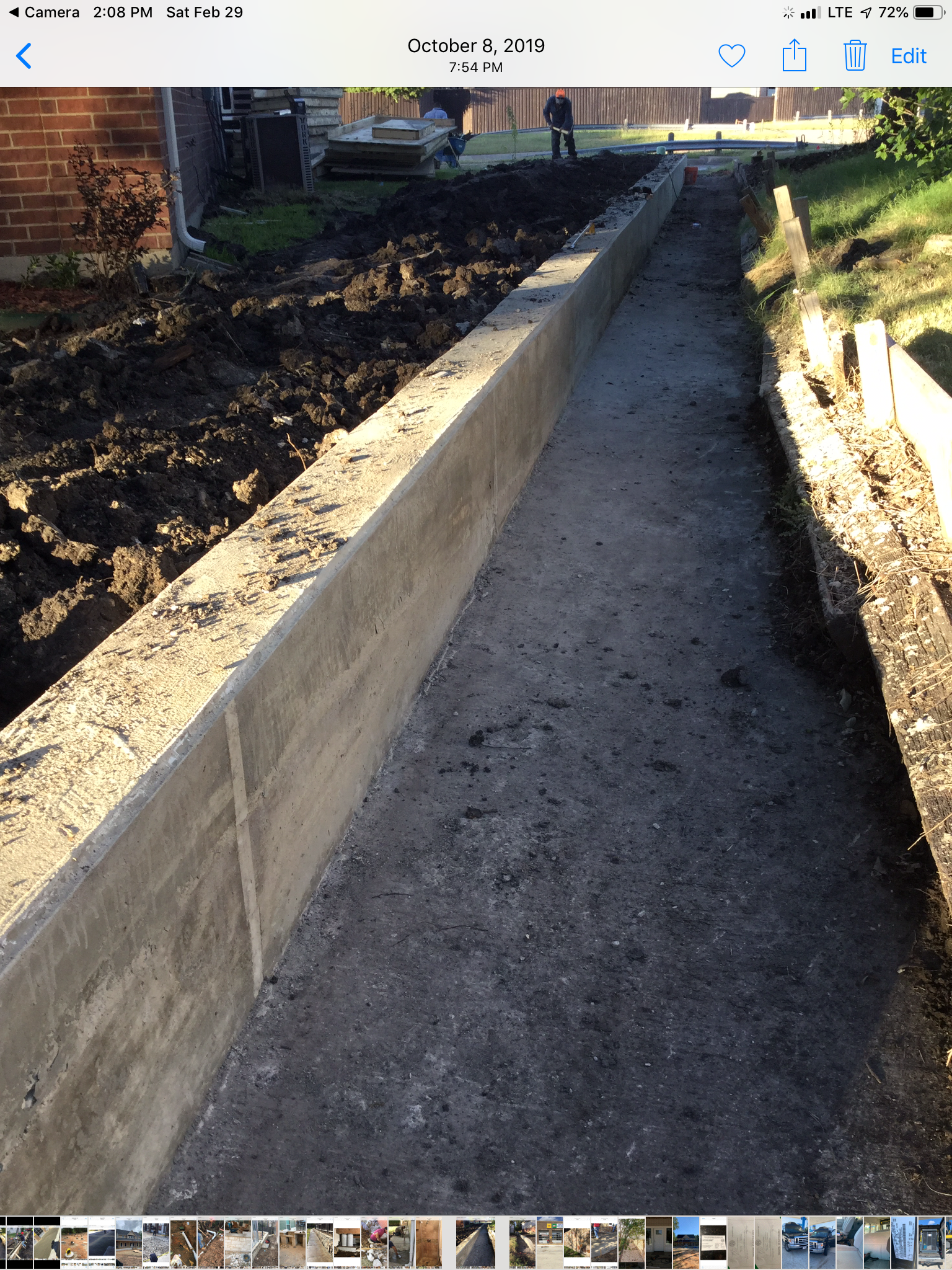
Poured Concrete Walls
Reinforced concrete with a clean, modern finish for tight spaces and heavy loads.
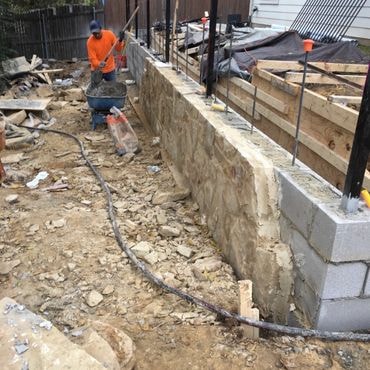
Concrete Block with Stone Veneer
A structural block core with a natural stone face.

Terraced Gardens
Turns a steep slope into level, usable planting beds.

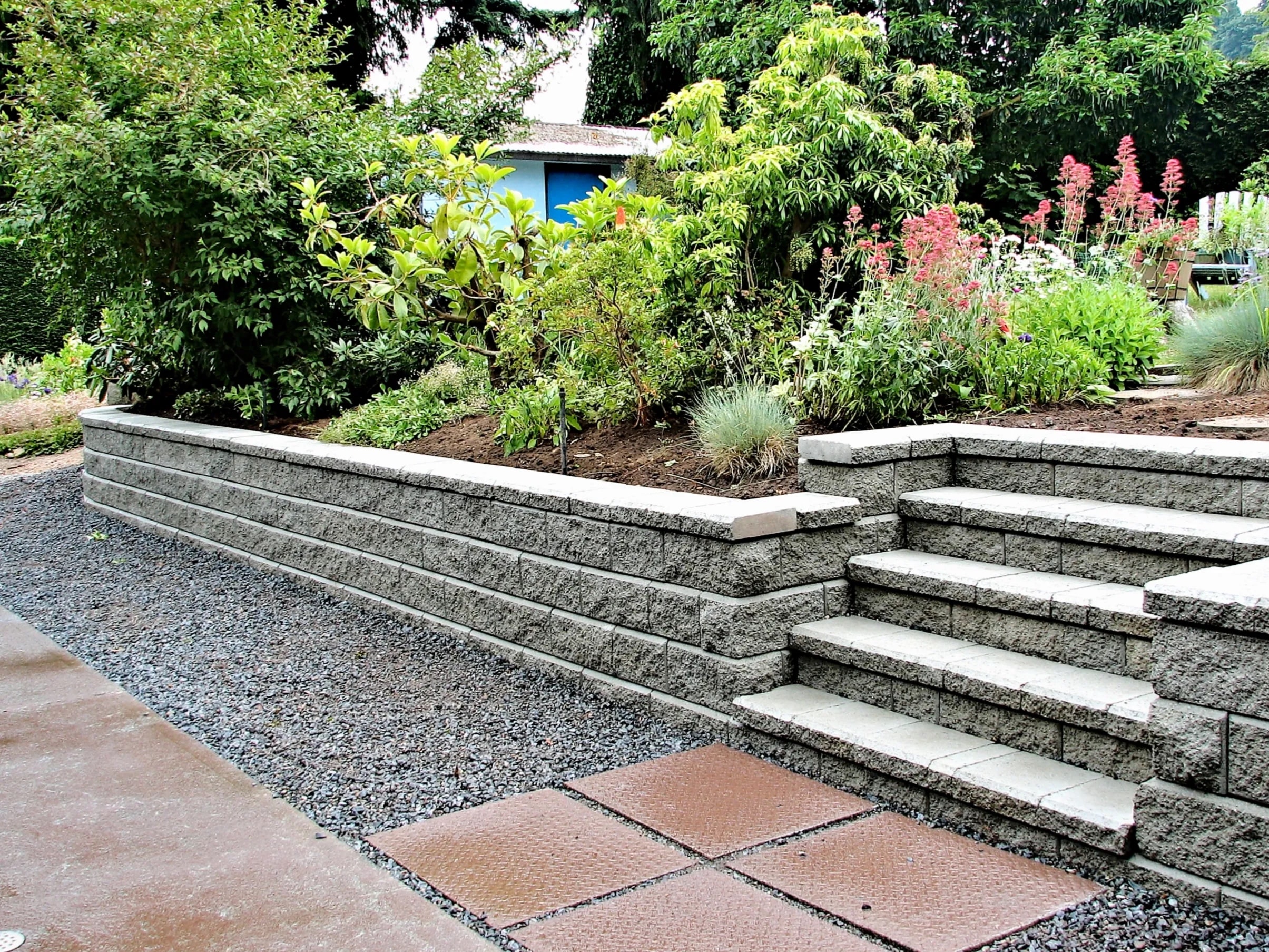
Segmental Block (Cinder Block)
Interlocking segmental concrete block walls deliver maximum structural strength for steep slopes and large grade changes — fast to install, built to last.
Why it matters
Protect Your Property from Soil Erosion & Slope Failure
DFW's expansive clay soil shifts dramatically with rain and drought cycles. Without a properly engineered retaining wall, slopes erode, foundations crack, and landscaping washes away — often causing thousands in damage.
A well-built retaining wall doesn't just hold back soil — it manages water flow, creates usable yard space, and adds significant curb appeal and property value. Here's how it works: we assess your slope, soil & drainage, recommend repair or replacement, draw up plans, and handle any permits your project needs.
- Prevents foundation damage from soil movement
- Controls drainage and reduces erosion
- Creates flat, usable outdoor living space
- Adds curb appeal and property value
- Engineered for DFW clay soil conditions
Retaining Wall Repair & Restoration
Wall Leaning, Cracking or Washing Out?
Leaning, cracking, or bowing walls are a sign of drainage failure or soil pressure buildup. We diagnose the root cause and fix it right — not just patch the surface.
We'll tell you honestly whether it needs a repair, a rebuild, or an engineer.

Most retaining wall failures come down to two things: poor drainage and an undersized design. We've repaired hundreds of walls across DFW — and we'll tell you honestly whether yours needs a repair, a rebuild, or an engineer.
Schedule a Free InspectionWarning Signs Your Wall Needs Attention
Wall leaning or bowing outward
Indicates soil pressure buildup or failed drainage behind the wall.
Horizontal cracks in the face
A sign of structural stress — often caused by hydrostatic pressure.
Soil washing out at the base
Erosion at the footing means the wall's foundation is compromised.
Efflorescence (white staining)
Mineral deposits left by water moving through the wall — a drainage problem.
Sections separating or shifting
Block or stone units moving apart signal footing failure or settlement.
We handle mortar repair, drainage correction, partial rebuilds, cap stone repair and full wall replacement.
Our work
Retaining Wall Projects in DFW
Real projects, real results — built by Boulderstone crews across Irving and the greater DFW area.
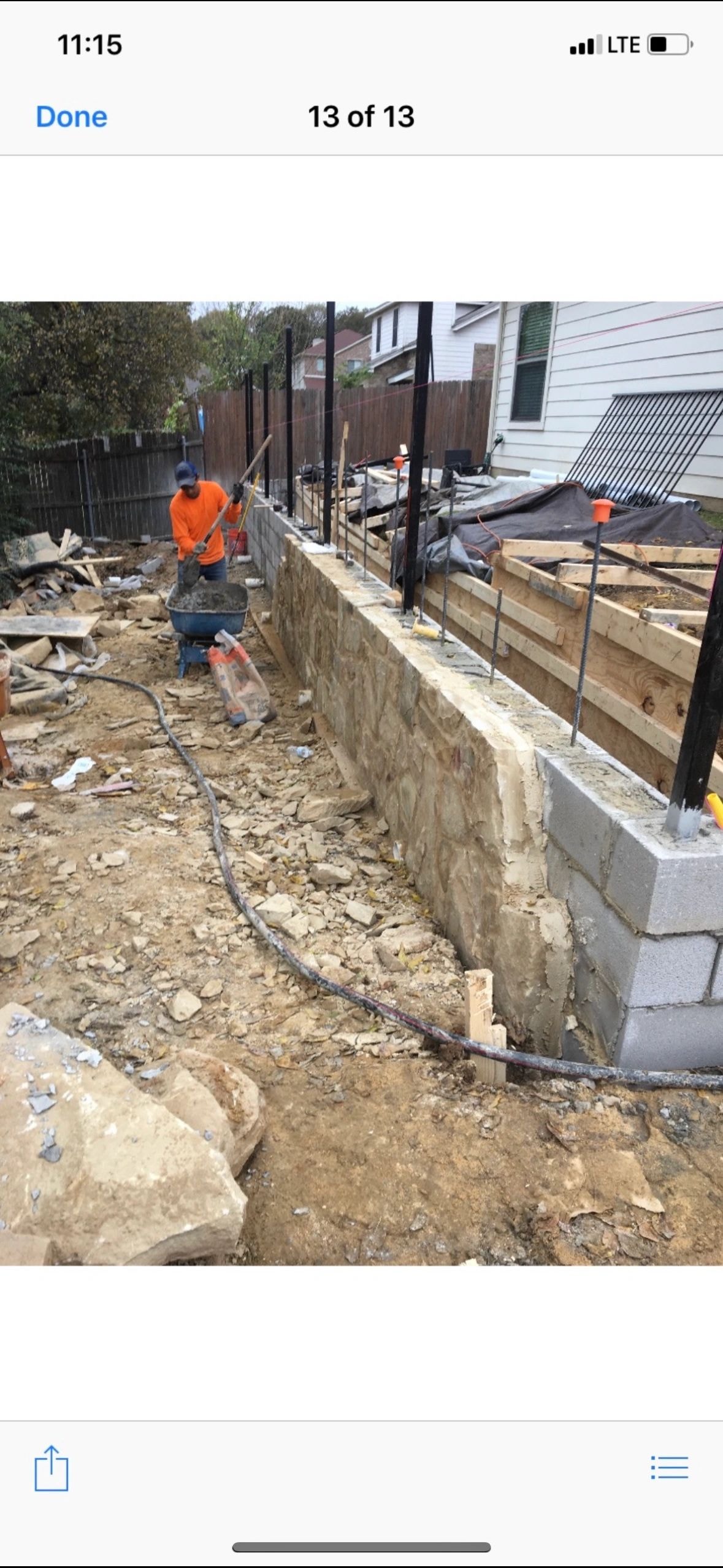
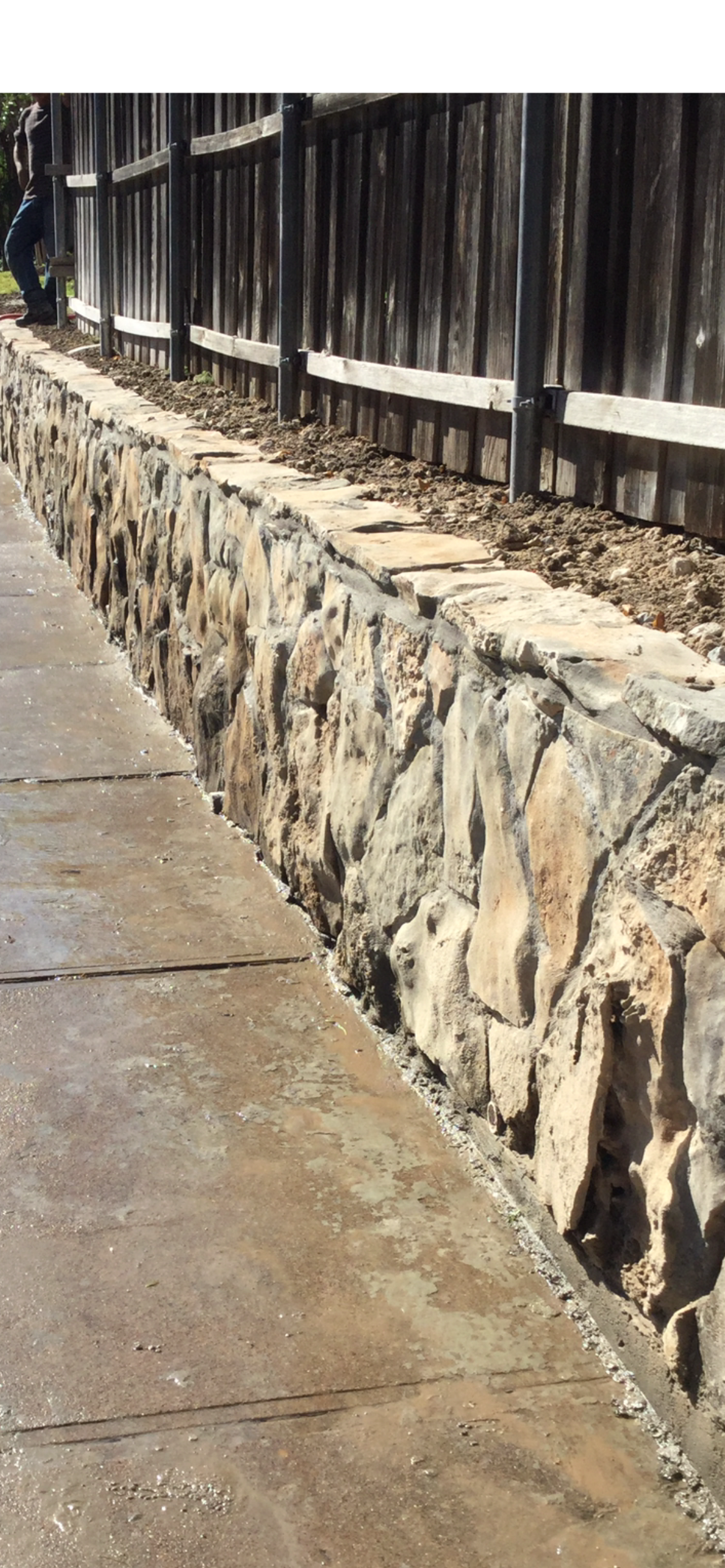
Natural stone wall · Coppell · 3 ft
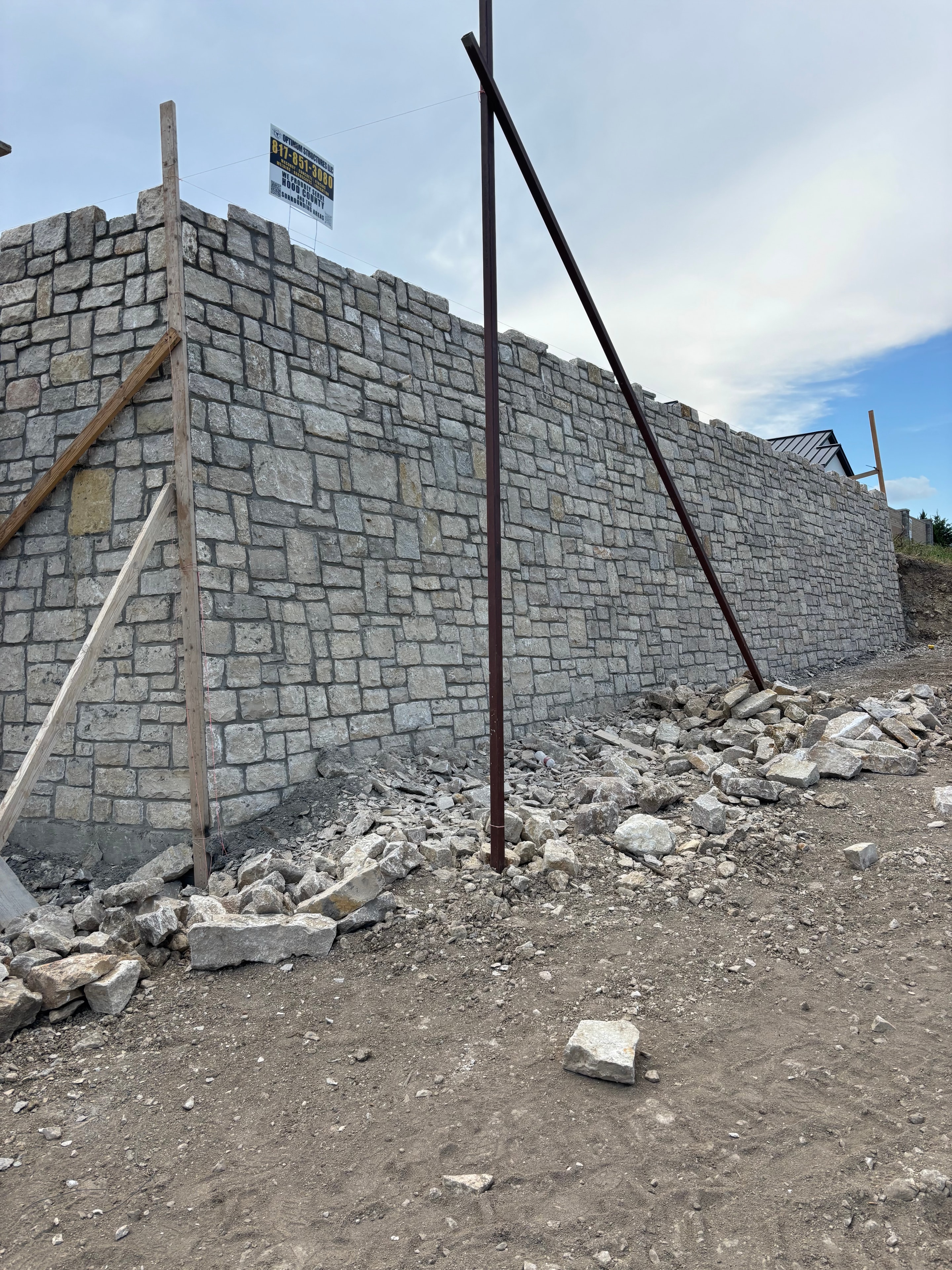
Concrete block wall · Irving · 4 ft
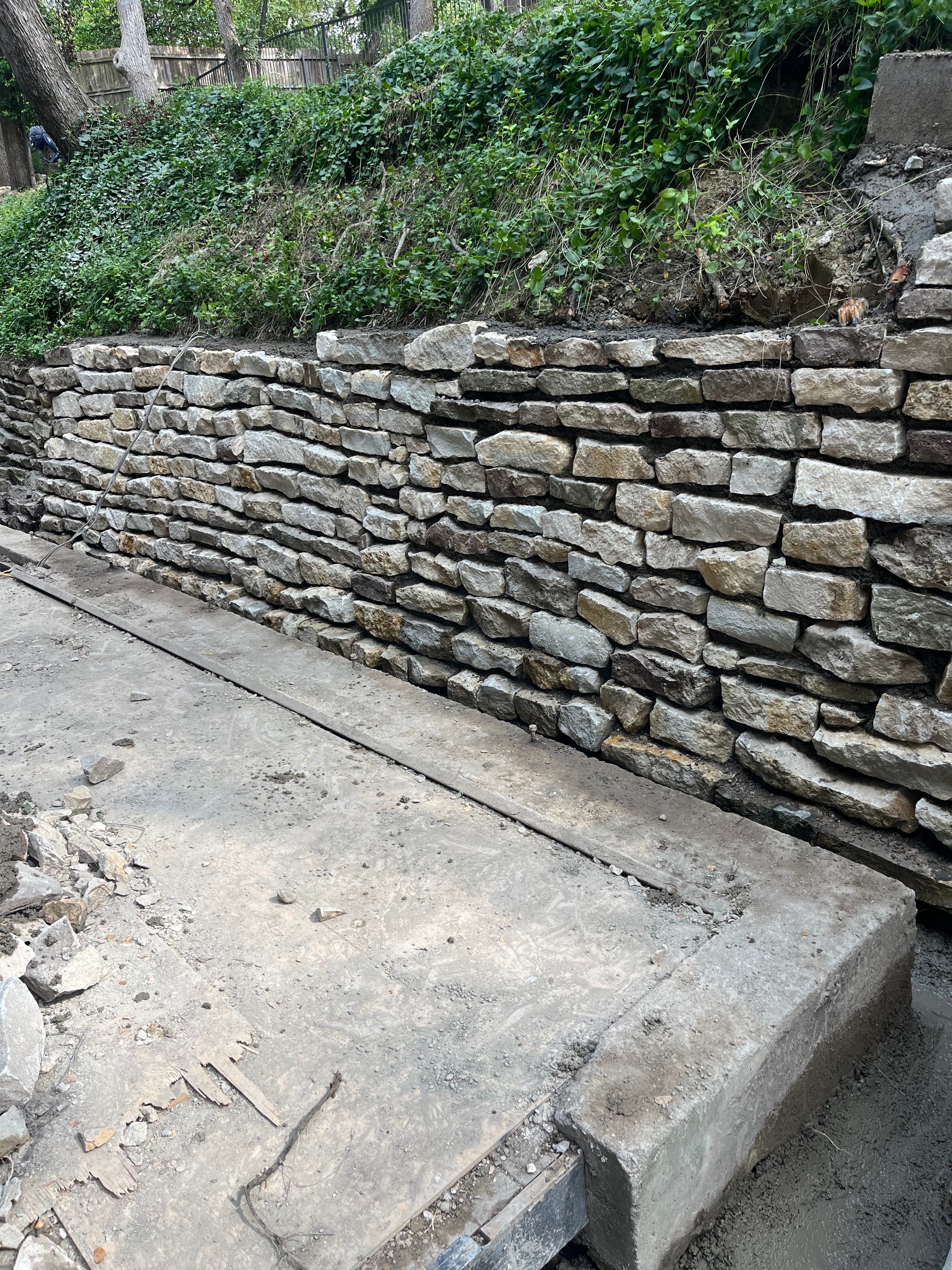
Stone veneer wall · Grapevine · 3 ft
Chopped stone repair · Las Colinas · 2 ft
How we work
Our Retaining Wall Process
From first call to final walkthrough — here's what to expect when you work with Boulderstone.
Free On-Site Estimate
We visit your property, assess the grade change, soil conditions, and drainage needs, then give you a detailed written quote.
Engineering & Design
For walls over 4 feet or on challenging slopes, we design the wall system to meet load requirements and local code.
Excavation & Footing
Proper excavation and a solid footing are the foundation of every wall we build. We never skip this step.
Drainage Installation
Gravel backfill, drainage pipe, and weep holes are installed to relieve hydrostatic pressure behind the wall.
Wall Construction
Stone, block, or concrete is set course by course with precision — every unit level, plumb, and properly tied.
Final Grading & Cleanup
We backfill, grade the surrounding area, and leave your property clean. Final walkthrough with you before we leave.
How Drainage Ties Into Your Retaining Wall
The number one cause of retaining wall failure in DFW isn't the wall itself — it's the water trapped behind it. Every wall we build includes an engineered drainage system designed for Texas clay soil and heavy rain events.
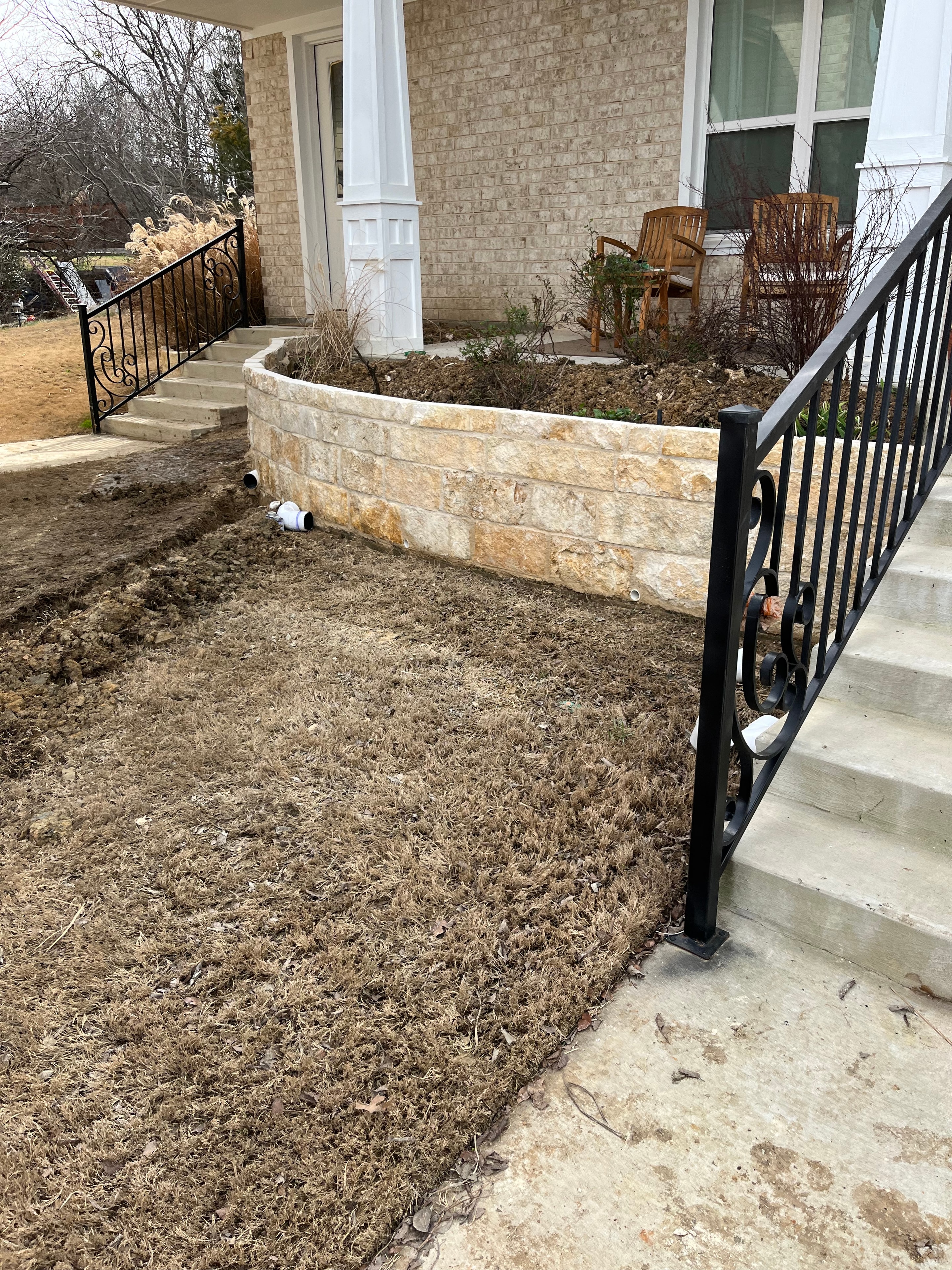
When rain falls, water saturates the soil behind your wall. Without a way out, that water builds up hydrostatic pressure — the same force that causes walls to lean, crack, and eventually collapse. In DFW, expansive clay soil makes this even worse: it swells when wet and contracts when dry, pushing and pulling on the wall with every weather cycle.
A properly built retaining wall doesn't just hold soil — it manages water. We engineer drainage into every project from the start, not as an afterthought.
What Goes Into a Properly Drained Retaining Wall
Gravel Backfill
We replace the native clay directly behind the wall with clean crushed gravel. Unlike clay, gravel does not hold water — it lets it pass through freely and relieves pressure on the wall face.
Perforated Drain Pipe
A 4-inch perforated pipe runs along the base of the wall inside the gravel layer. It collects water that moves through the backfill and channels it away from the wall to a safe outlet.
Weep Holes
For block and concrete walls, we install weep holes at regular intervals near the base. These small openings allow any water that reaches the wall face to escape before pressure builds up.
Filter Fabric (Geotextile)
A layer of geotextile fabric separates the gravel backfill from the native soil. It lets water pass through while keeping fine clay particles from migrating into the gravel and clogging the drainage layer over time.
Positive Drainage Outlet
Water collected by the drain pipe has to go somewhere. We route it to a daylight outlet, a swale, a French drain, or a storm drain — wherever makes sense for your property.
Surface Grading
The ground above and around the wall is graded to direct surface runoff away from the wall, reducing the volume of water that reaches the backfill in the first place.
Why DFW Clay Soil Makes Drainage Critical
Expansive clay swells up to 30%
North Texas black clay can expand dramatically when wet, exerting enormous lateral pressure on any wall that does not have proper drainage relief.
Heavy rain events are common
DFW regularly sees 3–5 inch rain events. Without drainage, that water has nowhere to go except into the soil behind your wall.
Freeze-thaw cycles add stress
Water trapped in soil behind a wall freezes and expands in winter, then thaws — repeatedly stressing the wall structure over time.
Poor drainage voids warranties
A wall built without proper drainage will fail regardless of material quality. Drainage is not optional — it is structural.

Common questions
Retaining Wall FAQs
Ready to Stop Erosion for Good?
Get a free on-site estimate from Boulderstone Landscape & Masonry. We serve Irving, Dallas, Fort Worth, Arlington, and surrounding DFW communities.